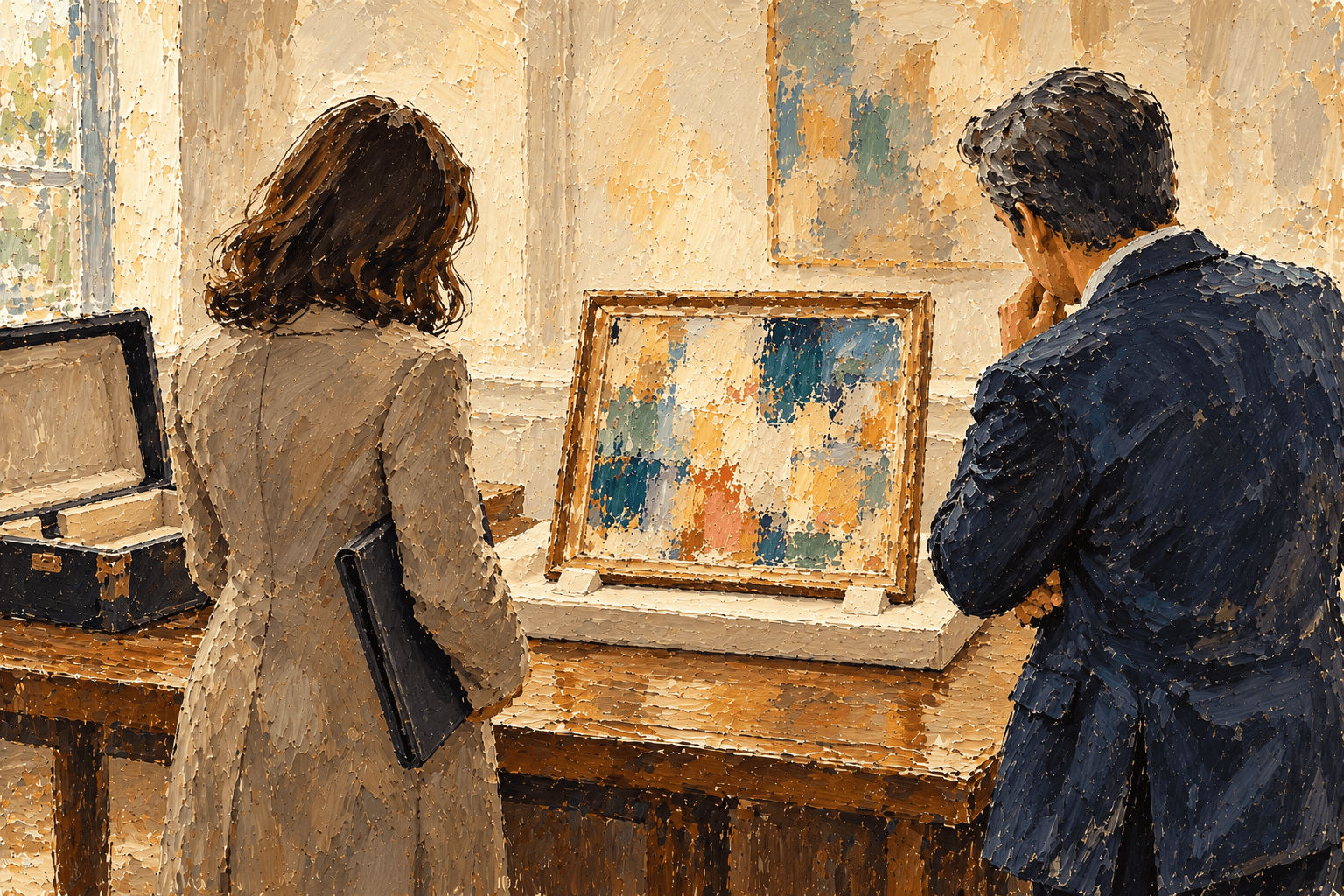
Artwork analysis at Finais, Switzerland

Determining whether an artwork is consistent with its attributed artist and presumed period requires more than visual observation alone. Materials, artistic techniques, surface structures, underlying features and previous interventions can provide important evidence about how and when an artwork was created. A diagnostic examination brings these elements together to support a scientifically informed assessment of authenticity.
At the FINAIS Laboratory, we examine the material, technical and stylistic characteristics of paintings and other artworks using established methods and advanced analytical technologies. Depending on the questions involved, the investigation may combine technical photography, multispectral imaging, microscopy and spectroscopy with art-historical and comparative evaluation.
Our approach is primarily non-invasive and designed to gather relevant information while respecting the physical integrity of the artwork. The findings are carefully documented and interpreted in relation to the attributed artist, artistic practice and historical context. Rather than relying on a single test or characteristic, artwork authentication requires different forms of evidence to be considered together. The resulting report provides a transparent foundation for further research, conservation, valuation, acquisition or sale decisions.
Docteur Mazzotta from Rome at Finais
What Is a Diagnostic Examination?
A diagnostic examination is a structured investigation of an artwork’s physical, technical and stylistic characteristics. Its purpose is to gather evidence that can help determine whether the artwork is consistent with its proposed authorship, period and historical context.
The examination may consider:
- materials and pigments
- painting techniques and methods of execution
- surface structures and brushwork
- preparatory layers and underlying features
- alterations and previous interventions
- condition and signs of ageing
- signatures and inscriptions
- construction and supporting materials
- stylistic and comparative characteristics
Each of these elements can contribute to a more complete understanding of the artwork. A material that was unavailable during the presumed period may raise questions, while materials and techniques consistent with an artist’s known practice may support the proposed attribution. Neither finding should be interpreted in isolation.
The scope of the examination is adapted to the artwork and the questions being investigated. A painting authentication process may require a different combination of methods from the examination of a work on paper or another type of object. The objective is to select the techniques most relevant to the individual case and build a coherent body of evidence.
A Multidisciplinary Approach to Painting Authentication
Artwork authentication is not based on one single discipline. Scientific analysis can reveal important information about materials and construction, but these findings must be interpreted alongside artistic technique, stylistic characteristics, documentary evidence and historical context.
Our diagnostic approach combines several perspectives:
- technical and scientific examination
- art-historical research
- stylistic and comparative analysis
- evaluation of provenance and existing documentation
- examination of signatures and inscriptions
- consideration of the artwork’s condition and previous restoration
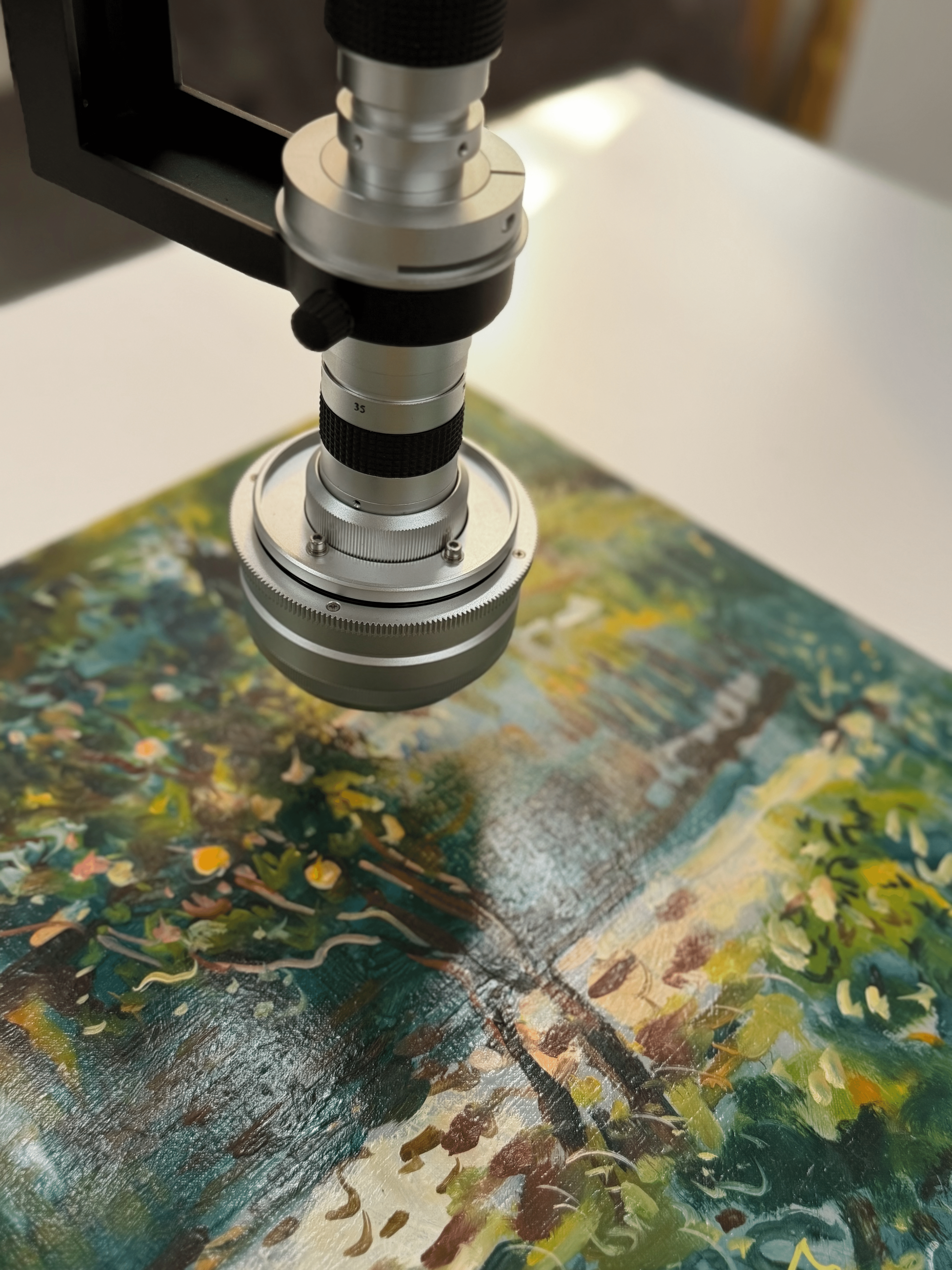
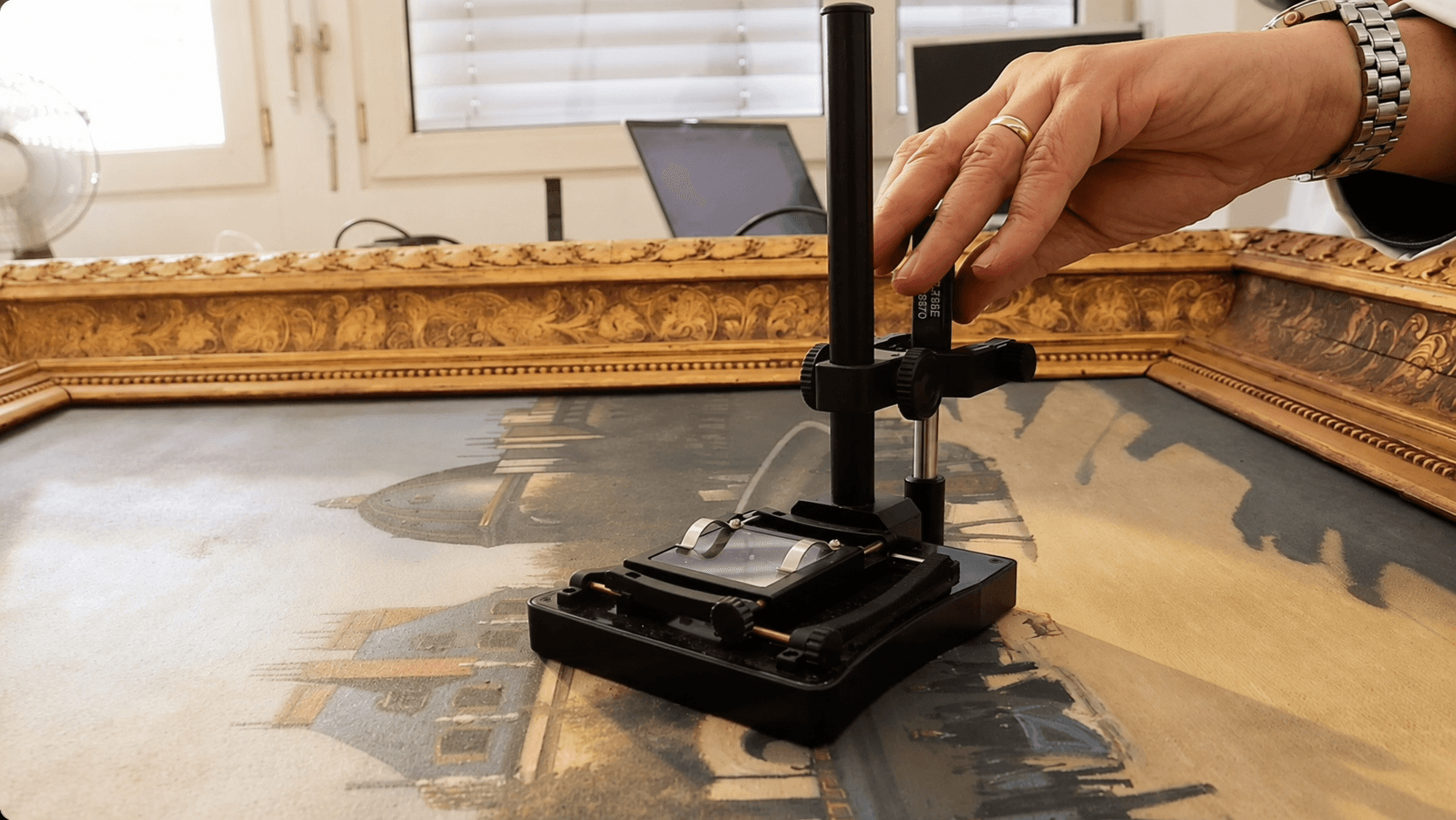
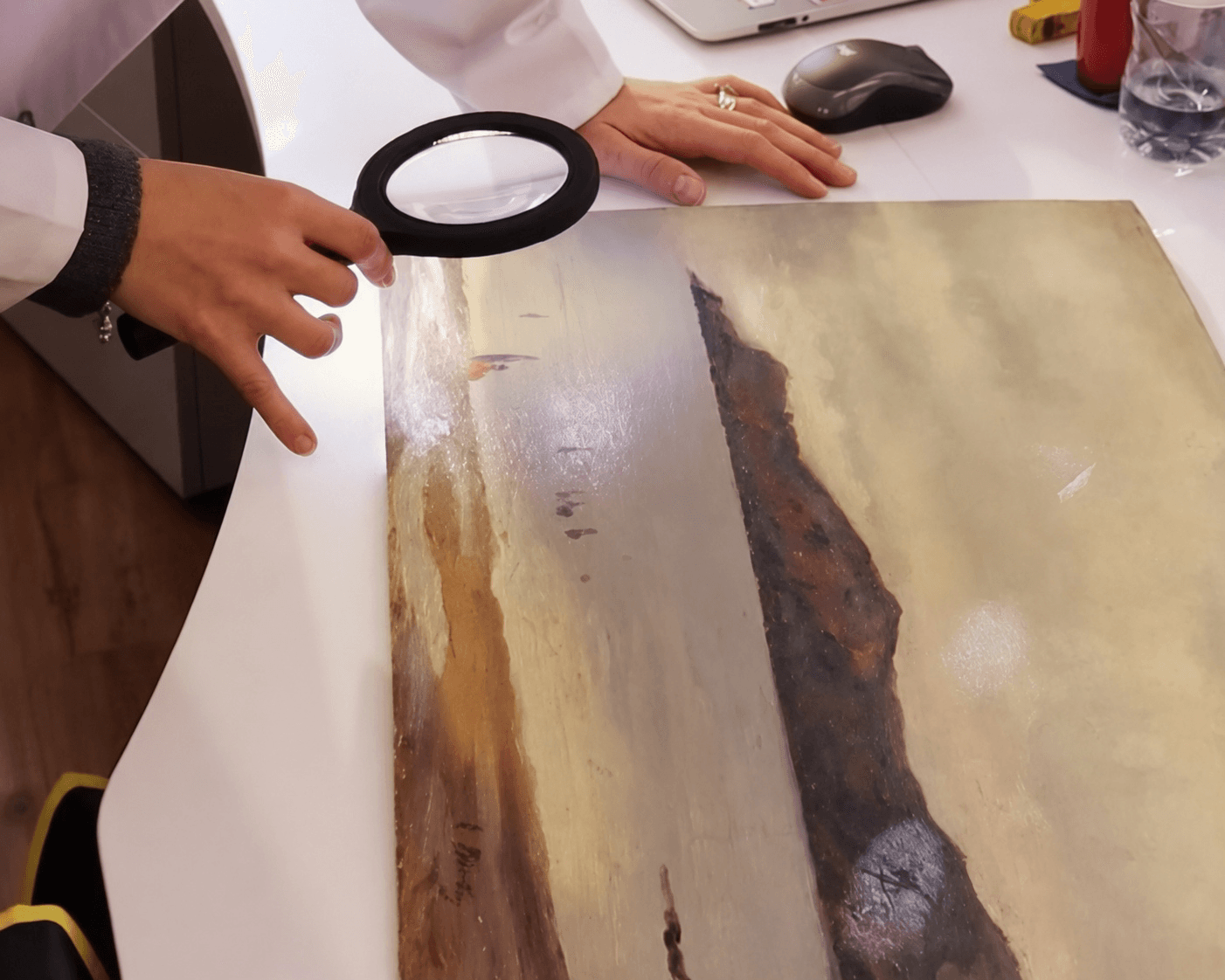
These different areas answer different questions. Pigment analysis may help determine whether materials are compatible with the presumed period. Infrared imaging may reveal preparatory elements beneath the visible surface. Microscopy can provide a closer view of brushwork, craquelure and paint structures. Provenance research may establish documented stages in the artwork’s history.
The evidential value lies in the relationship between these findings. When multiple independent observations point in a consistent direction, they can provide a stronger basis for assessment than any isolated result.
Documentation and the Diagnostic Report
The results of the investigation are brought together in a structured diagnostic report. Written observations, analytical findings and technical images provide a traceable record of the examination and the reasoning behind its conclusions.
Depending on the scope of the investigation, the report may contain:
- identification and description of the artwork
- examination objectives
- methods and technologies used
- high-resolution and technical photography
- observations concerning materials and technique
- analytical results
- information about condition and previous interventions
- comparative and contextual evaluation
- interpretation of consistencies and inconsistencies
- limitations and recommendations for further research
The report provides a professional foundation for subsequent decisions. It may remain relevant for provenance research, conservation planning, market evaluation, insurance, acquisition, sale or future scholarly examination.
Connecting Authentication with Other Services
A diagnostic examination often represents one part of a broader investigation. Scientific findings may raise questions about provenance, help determine conservation requirements or provide information needed before an artwork is valued or brought to market.
Depending on the objective, the examination may be connected with:
- a Provenance Dossier to reconstruct documented ownership history
- AI Signature Analysis for a detailed comparative examination of a signature
- an Economic Estimation Report after the artwork has been sufficiently identified and assessed
- Restoration where condition issues or previous interventions require treatment
- Art Advisory when findings need to be considered within a broader decision
- Art Sales and Acquisition when an artwork is being evaluated for a transaction
- Storage and Fine Art Logistics for secure protection and professional transport
Not every artwork requires all of these services. They are coordinated only where they respond to a relevant question or support the next stage of the artwork’s journey.
A scientifically informed artwork authentication process brings together materials, techniques, historical context and documented evidence. Through careful examination and transparent reporting, FINAIS provides a reliable foundation for understanding an artwork and making informed decisions about its future.